

1. Pattern Making
This is one of the first steps and the most critical in the casting procedure. A pattern is the exact copy of an exterior casting. It’s typically made of wax or wood, and should take into consideration the final casting shape as well as the shrinking, solidification, and hardening of the casting material. The pattern can be broken down into several parts to allow it to easily be removed.

2. Mold Preparation
The next step in the production process is to prepare the mold. This is basically a cavity into which molten steel will be poured. Sand is then pressed into place around the molding pattern. The sand is bound together using clay, chemical binders, or other binding agents. Once the sand is tightly packed, the pattern is removed, leaving a cavity of sand in the shape of that pattern. The cores of the mold are used to form internal features.

3. Pouring & Melting
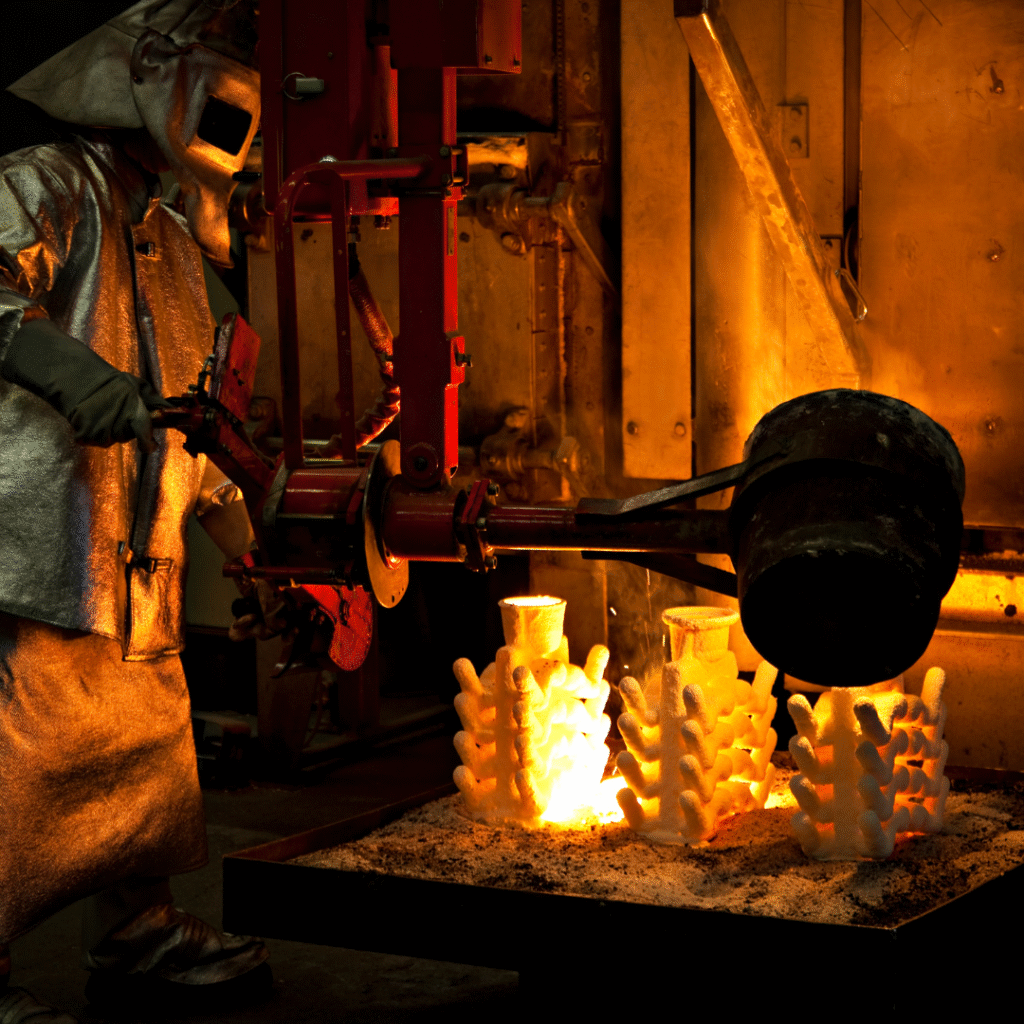
Pouring involves heating up the metal until it melts. It is then carefully poured into a mold. Pouring should be done carefully to avoid any defects. The molten steel should be held at the right temperature to ensure that it stays liquid until filling the mold. Pouring metals must be free of impurities and must be done to prevent turbulence. This can otherwise lead to air being trapped in the cast or incomplete filling.

4. Solidification
Solidification begins after the metal cools down. During the solidification process, metals undergo a phase transition from liquid to solid. This phase involves shrinkage. To compensate for this, risers can be used to add more molten steel into the casting. Cooling rate is critical as it affects the microstructure and mechanical properties of the casting.

5. Ejection
After the metal solidifies, the sand mold is broken to remove the casting. This step may be challenging in some cases, such as when the casting is intricate and sand becomes stuck in passageways. Often, the sand left from removing the casting can be recycled and reused in future molds.

6. Cleaning and Inspection
Even after the casting is ejected, the surface may still be covered with sand or have metal fragments attached. Cleaning involves removing impurities and trimming any excess metal. After cleaning, the casting must be inspected to ensure that it meets all specifications. Inspection includes visual inspections, dimensional checks, and nondestructive testing methods such as ultrasonic tests or radiographic examinations.

Spectro Analysis

Hardness Testing

MPI / UT Testing

Dimensional Inspection